

They did not agree, and they never have. Ra sent them together precisely because they are opposites, and the mission cracked along that seam within a day.
Anubis wanted Earth left *pure* — untouched, unshaped, a wilderness that would in time answer to him alone as the god of endings and judgement. When Ra overruled him and the shaping began, he made it a question of *control*: if the world must be built, it would be built to his design, to his glory, a monument with his name on the foundation. He is not a fool and not a monster — he is a god who cannot stand to be second, and who genuinely believes that a world grown wild stays honest and a world that is *given* things grows weak.
Bastet wanted Earth *cultivated* — helped, not ruled; luck and fortune seeded quietly so life could rise on its own. She was outranked in the moment Anubis moved to take command, and she did not fight him for it. She let the world itself make her case: as primordial Earth threw real danger at them, her patient way kept people alive where his did not, and she walked into Ra's council and left with the mandate to shape Earth and the promise that its fortune would be tended, not owned. Anubis was overruled a second time, in front of the whole pantheon. He has never forgiven it.
Everything after runs downhill from that day. Anubis withdraws but never lets go; two thousand years later he sends Salugi to break Bastet's covenant with Egypt (the eighteen cats), and in the modern age he is still trying to take the Bridges — the doors Bastet's network built — for himself. The feud is petty at its root (two gods, one wanting the credit) and world-ending in its consequences. Write them that way: Anubis grand, aggrieved, always reaching for control; Bastet unhurried, out-thinking the room, choosing the outcome over the win. When they share a scene, the audience should feel the next three hundred thousand years of trouble in it.
The gods then withdrew to observe and left Guardians to run things day-to-day. The principal Guardians were Femi and Babu. Under them, the Guardian Tribes and the Upzies carried civilisation forward across the world. Femi and Babu are the souls who, millennia later, are reborn as Siru Agar and Marcus Gray — neither of them aware of it.
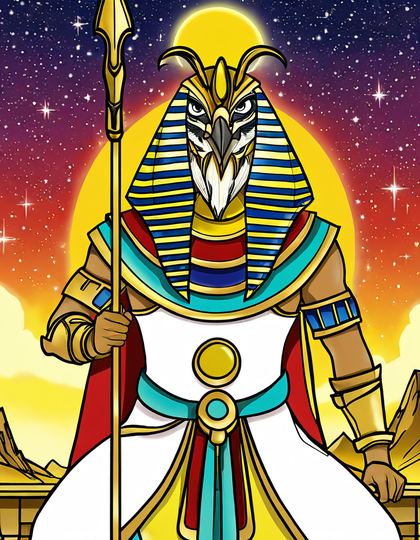 Ra
Ra
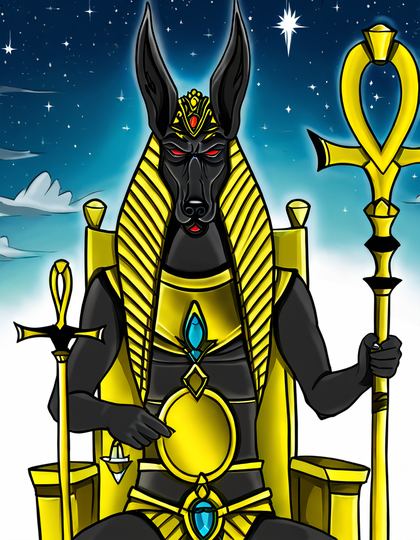 Anubis
 Earth
Earth
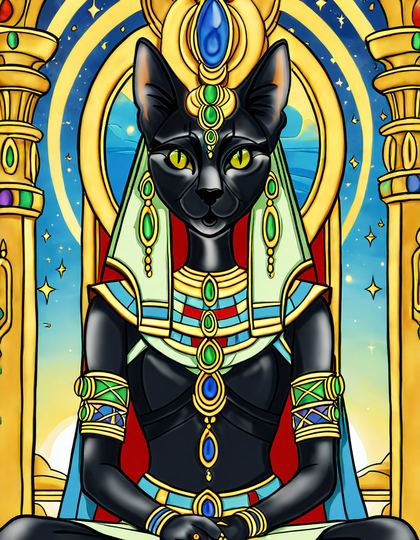 Bastet
 Salugi
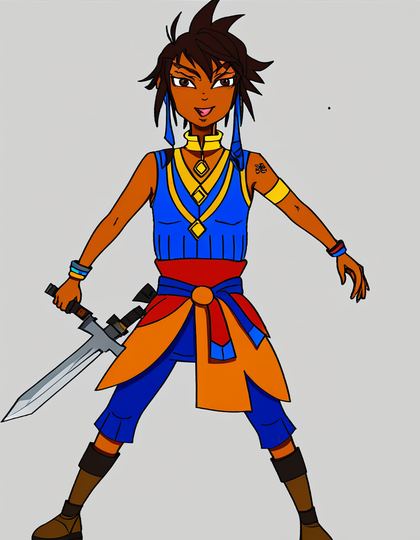 Babu
Babu
 Siru Agar
 Marcus Gray